Glass Slippers and Bracket Busters: The Hidden Formula Behind March Madness Upsets
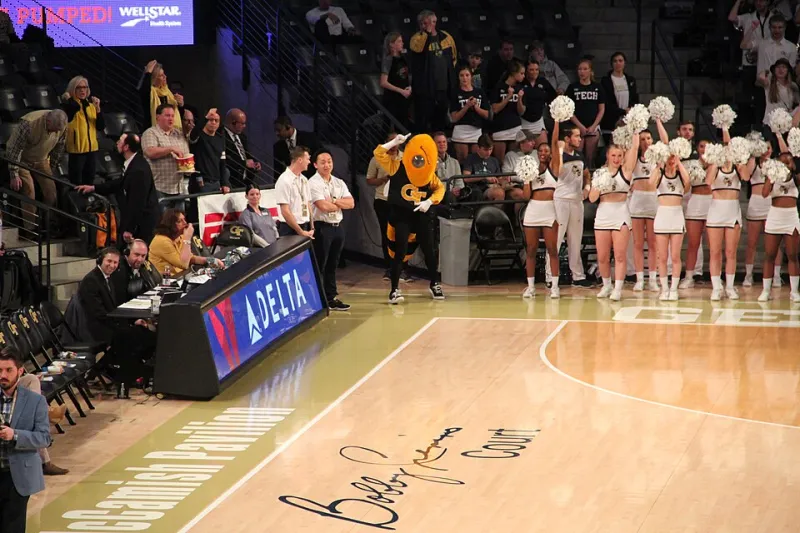
Photo: Thomson200, CC0, via Wikimedia Commons
March Madness is the greatest sports event on the American calendar. Bold statement, sure, but try telling that to someone who just watched a 13-seed knock off a powerhouse program with a buzzer-beater while their bracket combusts in real time. There is nothing else quite like it.
But here's the thing about those upsets — the ones that feel random, chaotic, almost cosmic — they're not. Not really. If you dig into the data, study the tape, and look at what these Cinderella teams actually do rather than who they are, you start to see the same fingerprints over and over again. The selection committee sees conference records and strength of schedule. The bracket builders see seed lines. The smart bettors and the obsessive fans? They see something else entirely.
Let's break down the actual anatomy of a March Madness upset.
The Three-Point Shooting Variable Nobody Weighs Correctly
This is the single biggest factor that casual bracket pickers ignore every single year. A mid-major team that shoots 37% or better from three-point range is exponentially more dangerous in a single-elimination format than their seed suggests.
Here's why. Tournament games are inherently volatile. Sample sizes are tiny. One hot shooting night from a team that lives behind the arc can completely neutralize a talent advantage. A blue blood program built on recruiting stars and interior dominance suddenly finds itself down twelve in the second half because a kid from a mid-major nobody cares about has hit four threes in eight minutes.
Look back at the most memorable upsets in recent tournament history. Oral Roberts. Saint Peter's. Loyola Chicago. UMBC. Every single one of those runs featured above-average three-point shooting paired with a team identity built entirely around that strength. They didn't accidentally start shooting well in March. They shot well all season. The bracket just didn't account for it.
The metric to track: teams shooting 36% or better from three on more than 20 attempts per game. That's your upset alert.
Defensive Intensity Is the Great Equalizer
Talent gaps are real. A team with four future NBA players is going to be more physically gifted than a team from the Missouri Valley Conference on most nights. But talent gaps shrink dramatically when one team plays suffocating, disciplined, high-effort defense and the other team hasn't faced that kind of pressure all season.
Major conference programs often play in environments where the officiating is more permissive, the pace is faster, and the defensive intensity varies wildly from game to game. When they run into a mid-major that plays in a slower, more physical conference — one where every possession feels like a street fight — the adjustment is brutal and the timeline is short.
Cinderella teams almost always rank in the top 40 nationally in adjusted defensive efficiency. They force turnovers. They contest every shot. They make the other team uncomfortable in ways that don't show up in the highlight reel but absolutely show up in the final score.
Defensive rebounding rate is another sneaky indicator. Teams that consistently limit second-chance opportunities don't give talented opponents the extra possessions that can bail them out when shots aren't falling.
The Coaching Adjustment Gap
This one is underrated to a criminal degree. Mid-major coaches, almost by definition, are master adjusters. They don't have the luxury of simply outtalenting their opponents. They have to out-think them. They've spent years finding edges in film, building game plans around specific matchup advantages, and making halftime corrections that completely change the shape of a game.
Meanwhile, some high-major programs run the same system regardless of opponent, trust their athletes to make plays, and have never really had to adapt on the fly because their roster is just better than everyone else's. Until it isn't.
When a well-coached mid-major team makes a specific halftime adjustment — switching a defensive scheme, changing ball-screen coverages, identifying a specific weak point in the opponent's offense — and the high-major coach doesn't have a counter, that's when upsets are born. The talent advantage doesn't disappear. But it gets neutralized long enough for a team playing with nothing to lose to steal a game.
Experience Over Youth, Every Time
Five-star freshmen are spectacular. They're also playing in their first NCAA Tournament game, in a building that might hold 20,000 screaming people, against a team that's been together for three or four years and has played in this exact pressure cooker before.
Senior-heavy rosters from mid-major programs consistently overperform their seed lines. This isn't sentimental. It's structural. Experienced teams make fewer mental errors in late-game situations. They know how to run a play out of a timeout. They don't panic when a run goes against them. They've been in tight games before and they know what it feels like to survive one.
When you're building your bracket, look at the age of the roster. A 12-seed with four or five seniors who've played 100-plus college games is a genuinely dangerous team against a 5-seed built around three freshmen who've never seen a tournament crowd.
The Momentum Factor: Conference Tournament Runs
Teams that enter March Madness riding a conference tournament championship — especially mid-majors who had to win four games in four days to get there — carry a specific kind of confidence that's hard to quantify but very easy to see on the court.
They're already in tournament mode. They've already beaten opponents under pressure this week. They're locked in, they're healthy (usually), and they believe. That belief is contagious and it matters in close games.
Conversely, high-major programs that coasted through their conference tournament or lost in the semifinals sometimes arrive in the bracket a little flat. They haven't had a survival game in days. The Cinderella has had three.
How to Spot the Next One
So what does the checklist actually look like? Here's a simple framework for identifying legitimate upset threats before the bracket gets busted:
Three-point shooting: 36% or better, high volume. Non-negotiable.
Defensive efficiency: Top 40 nationally in adjusted defensive rating.
Experience: Three or more seniors in the regular rotation.
Coaching track record: A head coach with previous tournament wins or a history of game-specific adjustments.
Conference tournament momentum: Won the automatic bid by running through a gauntlet.
Matchup advantage: Specific stylistic mismatch with the higher seed — a slow-paced team facing a high-major that hates playing in the mud.
No framework is perfect. That's why it's March Madness and not March Certainty. But the teams that check four or five of those boxes aren't just hopeful upsets. They're genuine threats. And if you're filling out your bracket looking only at seed lines and conference prestige, you're already losing to the person in your office pool who did their homework.
The Magic Is Real — But So Is the Method
Cinderella stories feel magical because we want them to. There's something deeply American about the underdog, the overlooked program, the kid who wasn't recruited by the big schools making the whole country stop and watch.
But behind every glass slipper, there's a coaching staff that identified an edge, a roster that outworked the talent gap, and a system that was built specifically to create chaos in a single-elimination format.
The magic is real. The method is just as real. And now you know where to look.